In baseball, spin rate refers to the number of revolutions a baseball makes per minute while it’s in flight after being thrown. It’s an important…
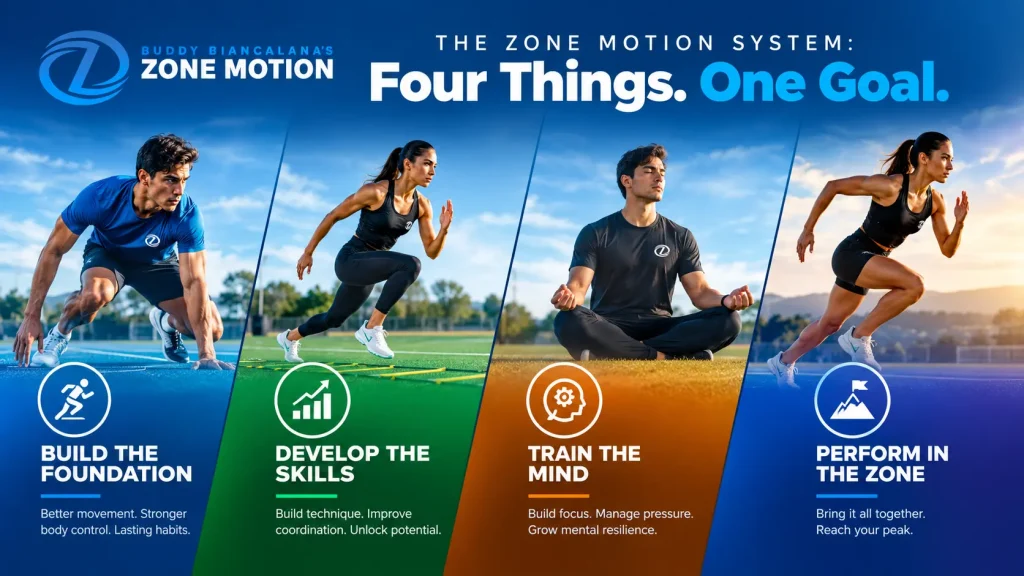
Zone Motion is mental training for athletes: a practical way to understand the Zone, train the brain-body connection, and bring more consistent performance to practice and competition.
Zone Motion is science-backed mental training for athletes — sports performance training that connects the brain, nervous system, and movement so athletes can access a more consistent performance state.
The Zone is a state of full presence: time feels different, thinking quiets, and motion becomes fluid. Zone Motion treats that state as trainable, not accidental.
Training helps quiet overthinking so sensory input can drive efficient motion. Athletes practice on-field and off-field so new patterns show up in competition, not only in conversation.
It is built for athletes, coaches, trainers, teams, parents, and sports organizations who want mental training for sports that is grounded in how the body actually moves.
Sports performance psychology often focuses on thoughts and motivation. Zone Motion emphasizes sports neuroscience training: attention, automaticity, and the brain-body loop that produces movement.
Athletes use short, repeatable practices to stay present, reproduce high-level days, and keep motion efficient when the game speeds up.
Coaches and trainers fold Zone Motion into practice: cueing attention, shaping movement patterns, and helping athletes perform under pressure without adding more mechanical noise.
The same principles apply across skill sports — baseball, basketball, hockey, golf, soccer, football, motorsports, and more — wherever timing, focus, and freedom of movement matter.
When an athlete is in the Zone, studies show that their Pre Frontal Cortex is quiet.
A quiet Pre Frontal Cortex allows the Basal Ganglia and Cerebellum access to sensory input.
Zone Motion is designed to help athletes develop greater consistency, focus, freedom of movement, and confidence by understanding the connection between the brain, nervous system, and athletic performance.
Help athletes stay present and focused during competition instead of getting pulled into overthinking.
Learn how to reproduce high-level performance rather than relying on occasional good days.
Understand how the brain and body work together to create efficient, athletic movement.
Develop tools to remain composed when competition becomes challenging.
Help athletes understand what allows them to perform at their best — and how to return to it.
Each sport can grow into its own landing page — baseball, golf, basketball, and more — so the homepage does not have to rank for every query.
Zone Motion Baseball Training for pitchers, hitters, and fielders who want command, timing, and a quieter mind.
Zone Motion Basketball Training for shooting, decision-making, and staying present in late-game moments.
Zone Motion Hockey Training for speed of play, awareness, and fluid motion under contact and chaos.
Zone Motion Golf Training for tempo, commitment to the shot, and performing when the round gets loud.
Zone Motion training for field sports where scanning, timing, and composure decide the play.
Zone Motion for motocross, supercross, and racing — attention and motion when everything is fast.
Whether you play, coach, train athletes, or support a program, Zone Motion gives a shared language for sports performance psychology that is grounded in movement.
For athletes looking to improve consistency, focus, and performance through mental training for athletes that lives in the body, not only in the mind.
For coaches looking for a different approach to athlete development — one that complements traditional skill work.
For professionals working with athletes on performance and movement who want a brain-body framework.
For organizations looking to introduce Zone Motion training across a roster, staff, or academy.
For parents looking for ways to support a young athlete’s development without adding pressure.
For clubs, academies, and programs interested in incorporating Zone Motion into performance systems.
A clear path from understanding to performance — so visitors do not have to reverse-engineer the methodology from slogans.
Learn how your brain and nervous system influence athletic performance — attention, tension, and the habits that show up under stress.
Use Zone Motion exercises and training principles to develop new movement and performance patterns.
Take the training into practice and competition so it becomes part of how you play, not a separate routine.
Develop the ability to access a more consistent state of performance when it counts.
Accessible language for the ideas behind the work — with a path to a deeper science page.
Athletic skill is not “mind versus body.” Performance is the conversation between what you attend to and how you move.
Arousal, tension, and recovery shape timing. Zone Motion works with the nervous system, not against it.
High-level motion is learned through repetition with the right attention — not by stacking more conscious instructions.
Efficient patterns emerge when the brain is not micromanaging every joint. Training helps those patterns stabilize.
Where attention goes, motion follows. Athletes practice staying with useful sensory information instead of commentary.
The Zone often feels automatic. Sports neuroscience training aims to make skilled motion available without forcing it.
Pressure changes the nervous system. Training prepares athletes to keep access to skill when stakes rise.
Starting earlier can support pathways for growth; older athletes can still retrain habits with committed practice.
When overthinking quiets, sensory input can reach the systems that organize fluid, well-timed motion.
When an athlete is in the Zone, studies show that their Pre Frontal Cortex is quiet.
A quiet Pre Frontal Cortex allows the Basal Ganglia and Cerebellum access to sensory input.
Zone Motion has been taught in 13
different professional sports
Zone Motion has been taught to athletes
in more than 20 amateur sports
Zone Motion helped pitchers increase
their average spin rate by 9.5%
Zone Motion helps pitchers increase their
strike-throwing rate by more than 13.2%.
No, starting earlier is better for developing neural pathways that support optimal growth and access to one’s full potential. However, an older player might appreciate this more, having faced consistent performance challenges over a longer period.
Since the training is grounded in neuroscience, it benefits all players who dedicate themselves to the on-field and off-field practices. It doesn’t require excessive time. Some players might find integration more challenging, depending on their nervous system state and prior conditioning. However, with commitment and an effort to seek answers to your questions, you will gain from the program.
A study conducted at the American Sports Medicine Institute, along with five other research projects, found that performance improves, development is faster, and the risk of soft-tissue injuries decreases.
In baseball, spin rate refers to the number of revolutions a baseball makes per minute while it’s in flight after being thrown. It’s an important…
“The zone” is a term used to describe a mental state where a person is fully immersed in an activity, often achieving peak performance and…
The brain is an incredibly complex organ that serves as the control center for the entire body. It processes sensory information, controls bodily movements, and…
Whether you are an athlete, coach, trainer, parent, or sports organization, discover how Zone Motion can help you develop more consistent performance.

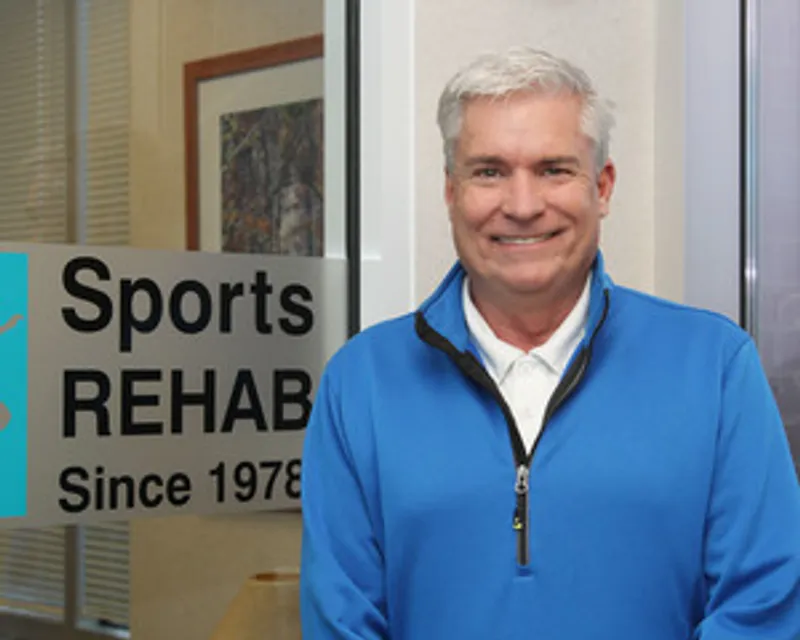
Paul McGannon M.S., A.T.C.
President Sports Rehabilitation and Hand Therapy Kansas City
Kansas City Kings NBA Trainer 1974-78
Kansas City Royals MLB Trainer 1975-1989

In my professional and personal opinion, this methodology is absolutely an invaluable training tool for athletes.”
Dr. Scott H. Calzaretta, C.C., C.C.S.P.
Certified Chiropractor Sports Physician
President Chiro-Medical group
San Francisco, CA

We know that both the latissimus and pec show highest muscle strain during the acceleration phase of the throwing motion. In particular, the latissimus has traditionally shown more strain than the pec during this acceleration phase. The EMG findings on muscle strain, using Buddy’s system, has shown a more balanced pattern with less latissimus strain and more pec recruitment.
We also know that too much tension in the latissimus can lead to core/trunk imbalance, which leads to injuries. In addition, we know that the latissimus is an accessory respiratory muscle and thus, a lower respiratory rate combined with less latissimus strain would be evidence of a more balanced and relaxed state. A previous study by Fleisig et al at ASMI has shown that Buddy’s system does not alter the overall throwing mechanics, but lead to a less perceived level of fatigue. It is important to note, that Buddy’s system, while changing muscle recruitment patterns, has also been shown to increase strike rate per the ASMI study without any drastic change to the pitchers’ throwing motion. In fact findings are showing an increase in the baseball spin rate after training with Buddy. The goal for every baseball player is to maintain or increase performance, while remaining healthy and injury free. If you put all the data together, I believe Buddy has a system that helps accomplish that.”
Dr. Kevin Witte D.O., M.B.A
Advanced Orthopedics and Sports Medicine
Andrews Research and Education Institute Sports Medicine Fellow
Kansas City, MO

September 20, 2017 Updated: September 20, 2017 4:34pm
Most of this week’s phone interview with Scott McCarron made perfect sense. McCarron talked about his wild success on the Champions Tour, his fondness for Pebble Beach and trying to keep pace with ageless Bernhard Langer.
Along the way, McCarron dropped a name out of the blue, out of another sport, out of short left field: Buddy Biancalana.
This might not resonate for golf fans, but it probably does for those of a certain age who follow baseball. Biancalana was a scrappy shortstop from Marin County who spent parts of six seasons in the major leagues and played spectacularly in helping the Kansas City Royals win the 1985 World Series. And now, as it turns out, he’s helping McCarron enjoy a renaissance on the golf course.
McCarron also has Northern California roots. He was born in Sacramento, lived in Danville for a time as a kid and attended Vintage High in Napa. Then he went off to UCLA and stitched together a solid PGA Tour career, with three victories and more than $12 million in earnings. He largely vanished from the scene in his mid-40s, as many solid tour pros do. But he was primed and ready to join the PGA Tour Champions when he turned 50 in July 2015 and has won six times in 53 starts since then.
McCarron stands No. 2 on this year’s money list, behind only Langer, entering the Pure Insurance Championship (previously known as the First Tee Open) starting Friday at Pebble Beach. Langer and McCarron have separated themselves from the pack, easily the two best players in the 50-and-older crowd.
So what got into McCarron? Well, he’s smacking tee shots long and straight (sixth on tour in driving distance, averaging 295.6 yards). His putting has been great (third on tour). And Biancalana helped McCarron unclutter his mind. McCarron, now 52, described Biancalana as a sports psychologist, essentially, and characterized his guidance as “abstract thinking.” McCarron figures his body knows what to do, after a lifetime of hitting golf balls, and his mind just needed to stay out of the way. “It’s about letting your mind be quiet and allowing your body to do what it’s supposed to do,” McCarron said. Biancalana, who has worked with athletes in several sports, clearly has made an impact on McCarron.
Scott McCarron, PGA Senior Tour

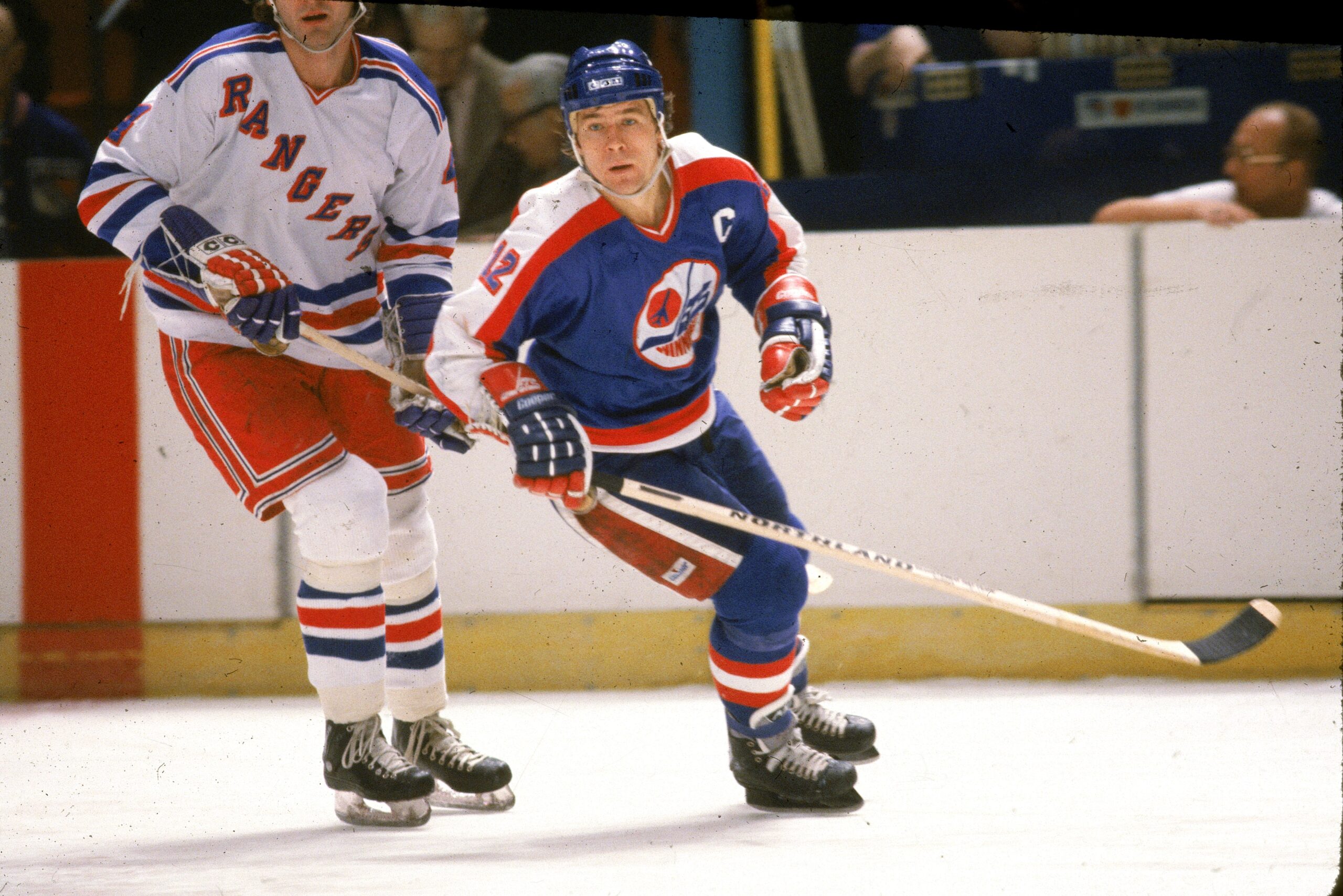
Morris Lukowich, Winnipeg Jets (retired)

Anthony P.

Dr. Stacy Fuchino

Logan Miller, Basketball Player

I’m off to two more big tournaments next week and I’m feeling great about playing.
Thank you for everything!
You are the best!!
Shawn McCullough – 2022 Virginia Super Senior Women’s Champion

Genki LeClair

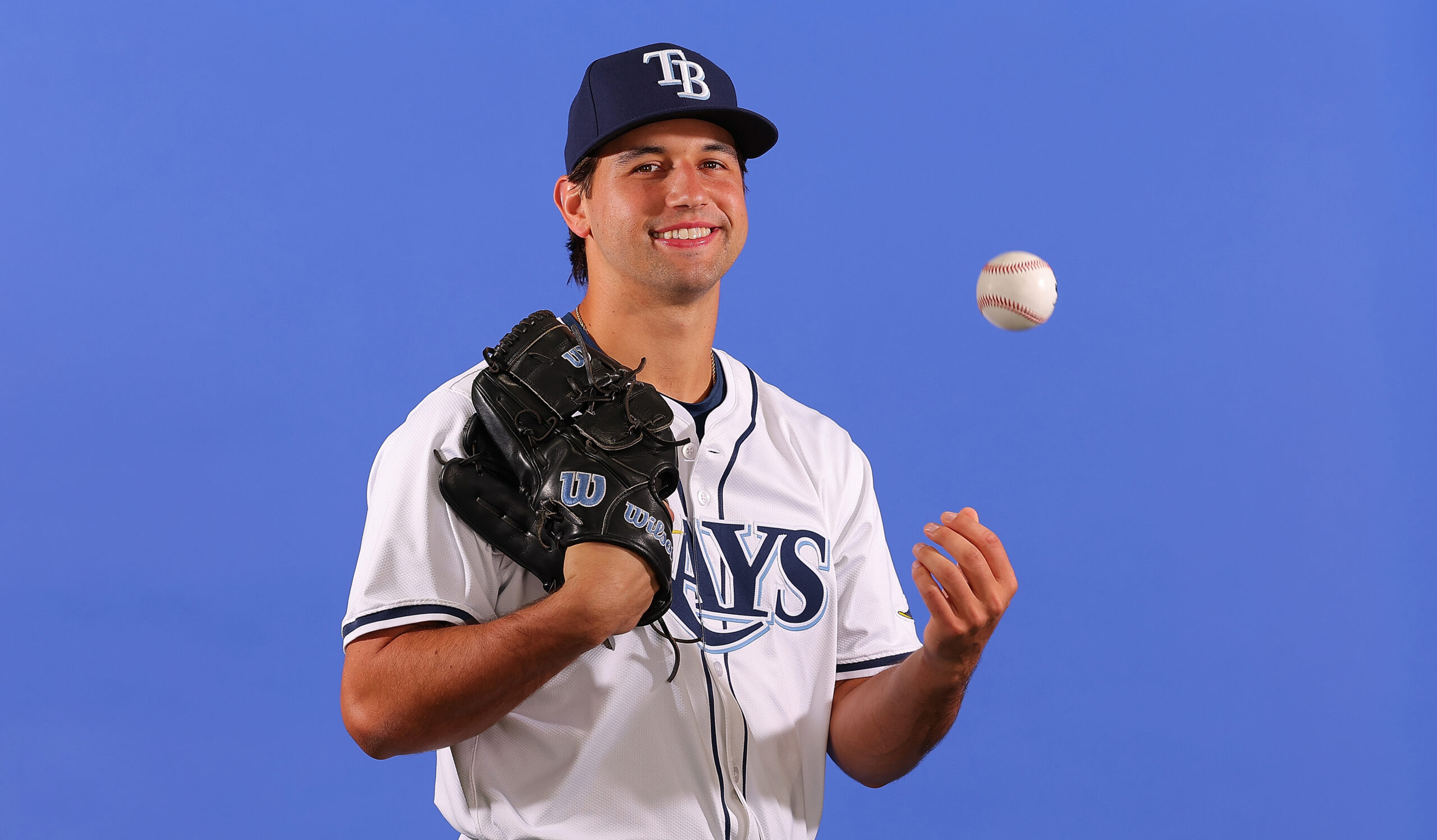
Ian Seymour, Tampa Bay Rays

Charley Hoffman – Four Time PGA Tournament Winner
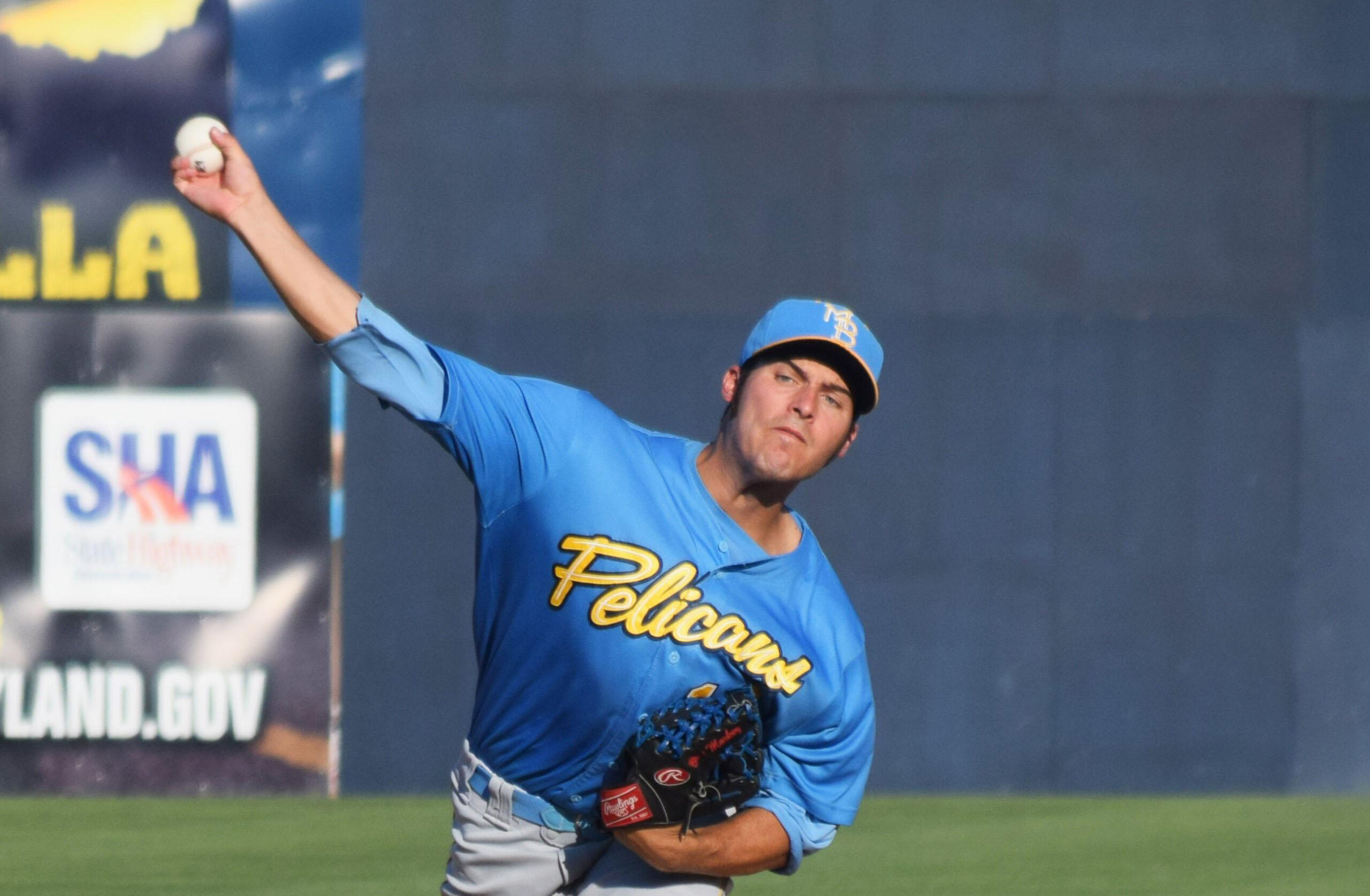
Brad Markey, Chicago Cubs Retired

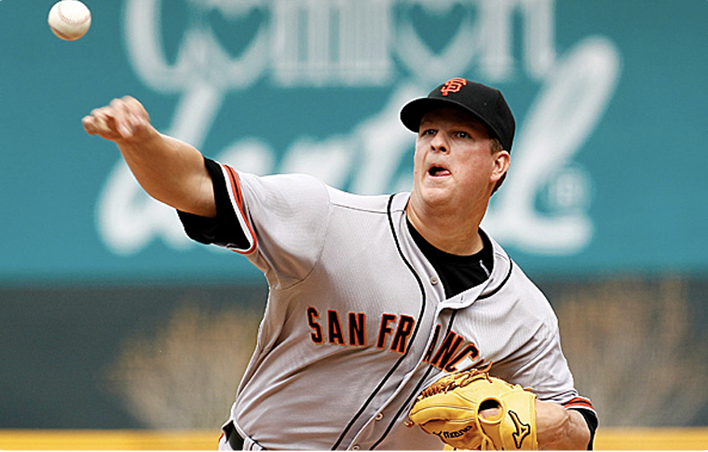
Matt Cain, San Francisco Giants—Retired – Giants Hall of Fame

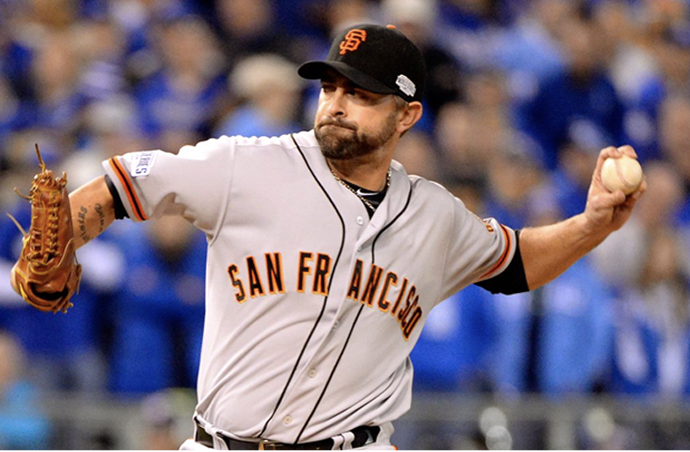
Jeremy Affeldt, San Francisco Giants–retired

Zone Motion has given me the ability to overcome fears, doubts, injuries, and failures in my career. Buddy has taught me how to process these emotions and has given me more confidence in who I am as a person. This has led me to significant improvement on the field and in my every day life.
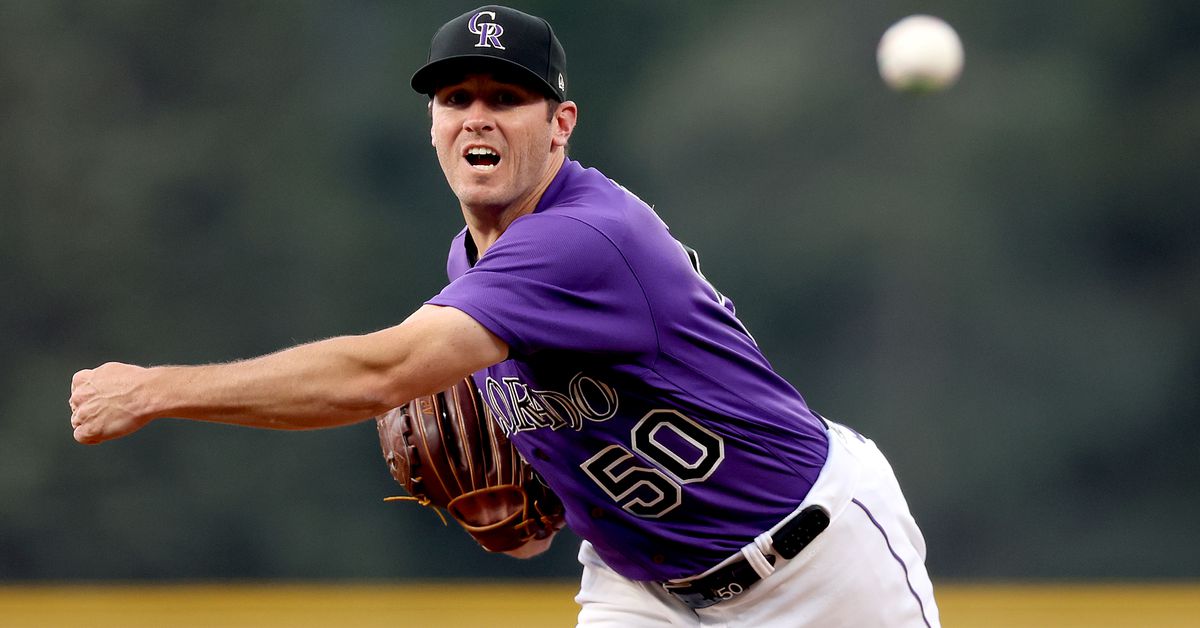
Ty Blach, Colorado Rockies

We also drastically improved all offensive categories, including our quality at-bat avg. and consistency of hard contact. Our offensive production went to another level with virtually the same starting lineup. Student-athletes reported fewer injuries, a higher quality of rest and recovery, better stress management, and higher quality sleeping patterns.
I am skeptical by nature but believe wholeheartedly in this system. This is not a Sports Psychology program but a Sports Biology program. Gone are the days of “Muscle Memory” as we now know that “Motion Memory” is at the center of athleticism. We transformed players and overcame training plateaus and challenges in record-setting fashion. As a coach who often talked about the importance of the mental game in sports, Buddy’s Zone Motion program is THE WAY to unlock your true abilities through sports biology! I am fortunate to have found this program.
Brian Leighton Assistant Athletic Director Head Baseball Coach – Albertus Magnus College

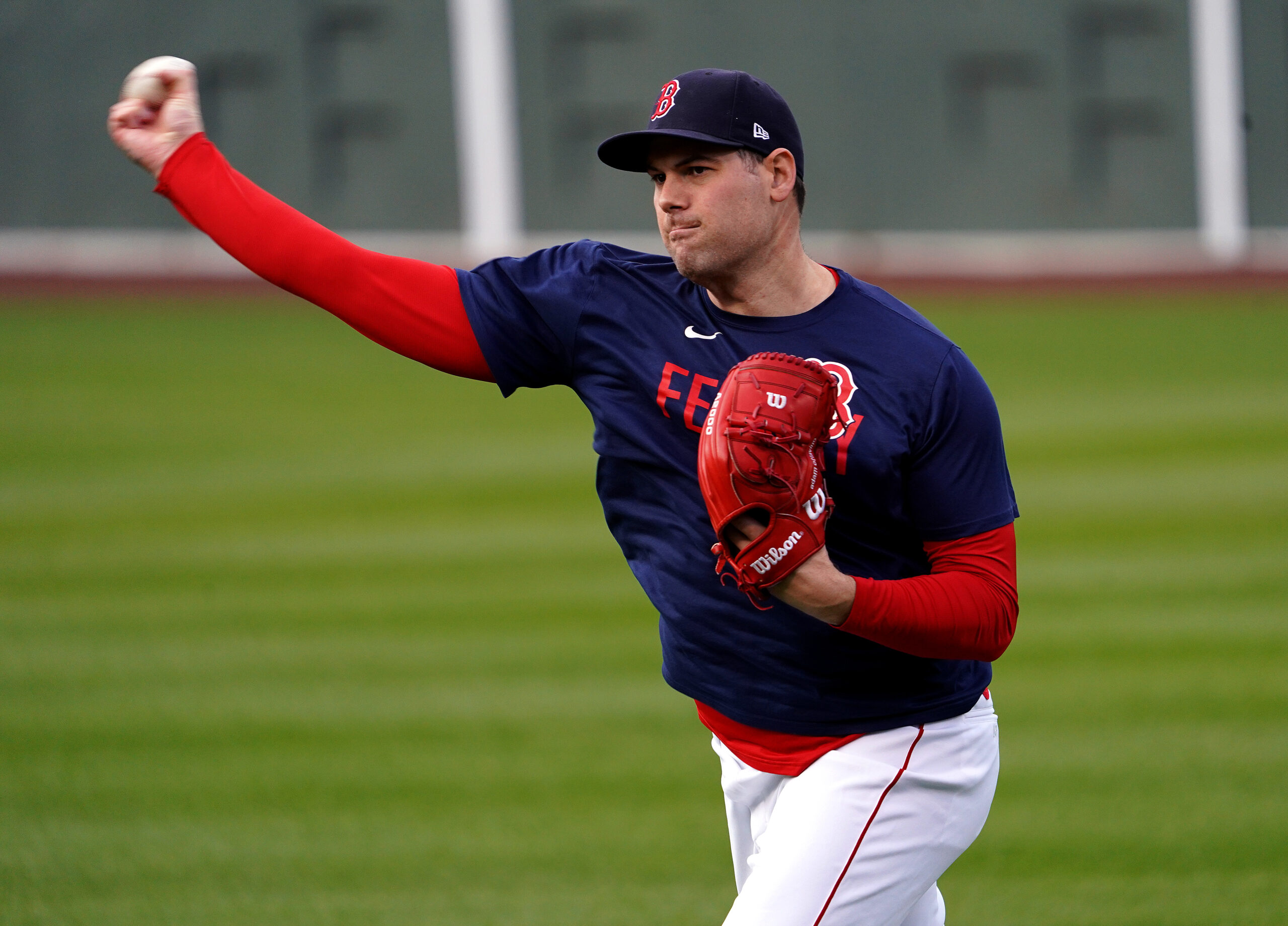
Adam Ottavino, New York Mets

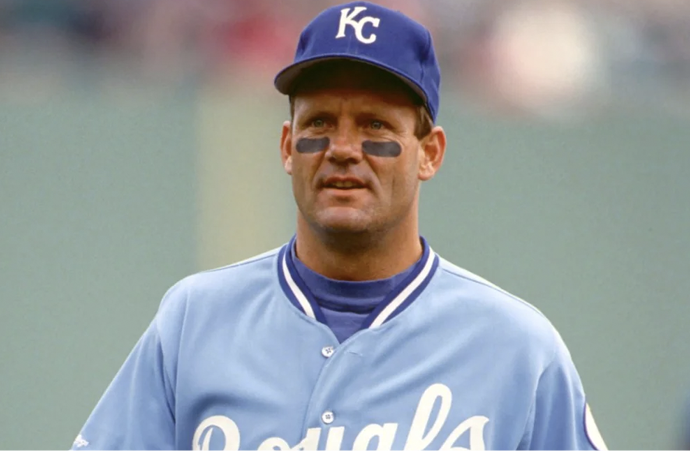
George Brett, Baseball Hall of Fame

We also drastically improved all offensive categories, including our quality at-bat avg. and consistency of hard contact. Our offensive production went to another level with virtually the same starting lineup. Student-athletes reported fewer injuries, a higher quality of rest and recovery, better stress management, and higher quality sleeping patterns.
I am skeptical by nature but believe wholeheartedly in this system. This is not a Sports Psychology program but a Sports Biology program. Gone are the days of “Muscle Memory” as we now know that “Motion Memory” is at the center of athleticism. We transformed players and overcame training plateaus and challenges in record-setting fashion. As a coach who often talked about the importance of the mental game in sports, Buddy’s Zone Motion program is THE WAY to unlock your true abilities through sports biology! I am fortunate to have found this program.
Brian Leighton Assistant Athletic Director Head Baseball Coach – Albertus Magnus College