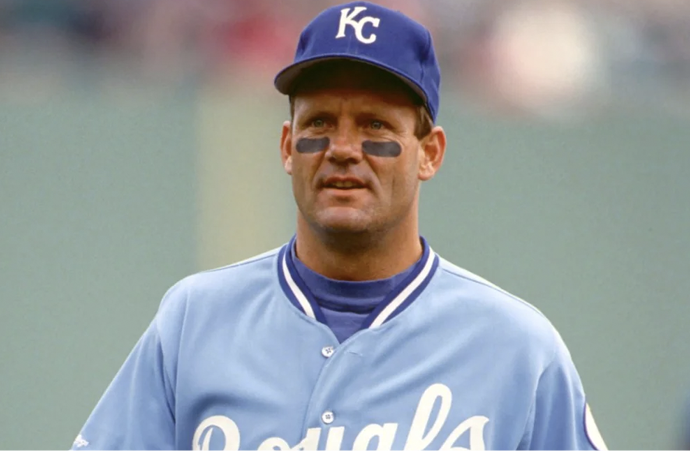

How to Build Sustainable Confidence as a Baseball Player
Confidence can change the way a baseball player approaches every pitch, at-bat, defensive play, and game situation. A confident player is not necessarily the player who never feels nervous or makes mistakes. Instead, confidence comes from knowing how to respond when things do not go according to plan.
Baseball is a mentally demanding sport. A hitter can go 0-for-3 and still have another important at-bat. A pitcher can give up a home run and immediately have to face the next batter. A shortstop can make an error and then have to make a difficult play two innings later. Because baseball gives players so many opportunities to think about what just happened, negative thoughts can quickly affect performance.
The good news is that confidence is not simply something a player either has or does not have. It can be developed through preparation, repetition, self-awareness, and mental performance training.
If you want to learn how to build confidence as a baseball player, start by changing the way you define confidence.
What Does Confidence Mean in Baseball?
Baseball confidence is the ability to trust your preparation and commit to your skills even when the outcome is uncertain.
It does not mean believing you will get a hit every time or strike out every batter. No baseball player performs perfectly every game.
Real confidence means being able to say:
“I am prepared for this situation, and I can trust myself to respond.”
That distinction is important.
A player who believes confidence means always succeeding may lose confidence after one strikeout, error, bad pitch, or poor game. A player who understands confidence as trust in the process can remain composed even when the results are not immediately positive.
This is one reason mental performance in baseball is so important. Physical skill gets a player into position to perform, but the ability to access that skill under pressure can influence what happens next.
Why Do Baseball Players Lose Confidence?
There are many reasons a baseball player may struggle with confidence.
One of the most common is focusing too heavily on results.
A hitter may think:
“I have to get a hit.”
A pitcher may think:
“I can’t give up another run.”
A fielder may think:
“I can’t make another error.”
These thoughts can increase pressure because the player is focusing on an outcome that cannot be completely controlled.
Other common confidence problems include:
- Fear of making mistakes
- Comparing yourself with teammates
- Worrying about what coaches think
- Thinking about previous failures
- Overanalyzing mechanics during competition
- Fear of striking out
- Losing confidence after an error
- Performing well in practice but struggling in games
- Trying to be perfect
- Thinking too much about statistics
Understanding why confidence disappears is the first step toward rebuilding it.
Stop Measuring Your Confidence by Your Results
One of the biggest mistakes athletes make is allowing the scoreboard, batting average, ERA, errors, or statistics to determine how confident they feel.
Statistics are useful. They help players and coaches evaluate performance over time. But they should not determine how a player feels about himself after every individual play.
Baseball is full of failure.
Even elite hitters make outs. Pitchers give up hits. Fielders make errors. Teams lose games.
If your confidence depends entirely on successful outcomes, your confidence will constantly move up and down.
Instead, evaluate the things you can control.
Ask yourself:
- Did I prepare properly?
- Did I stay committed to my approach?
- Did I compete with focus?
- Did I communicate with my teammates?
- Did I respond well after a mistake?
- Did I execute what I practiced?
This creates a more stable foundation for confidence.
Build Confidence Through Preparation
Confidence becomes easier to access when you know you have prepared.
Preparation does not guarantee success, but it gives you something to rely on when pressure appears.
For a baseball player, preparation can include physical training, skill development, game experience, recovery, nutrition, and mental training.
A player who repeatedly practices hitting, fielding, throwing, base running, and game situations develops familiarity with the demands of competition.
The same principle applies mentally.
If you practice responding to pressure, mistakes, distractions, and difficult situations, those situations become less unfamiliar when they appear during a game.
Confidence is often strengthened before game day.
Focus on What You Can Control
Baseball players cannot control every outcome.
You cannot control:
- The umpire’s call
- The weather
- The opponent
- A bad bounce
- Whether a hard-hit ball becomes an out
- How other players perform
- Every result of an at-bat
You can control your preparation, effort, attention, body language, communication, and response.
When you focus on controllable factors, you reduce unnecessary mental pressure.
For example, instead of thinking:
“I have to get a hit.”
Try focusing on:
“I am going to see the ball, trust my approach, and compete with this pitch.”
The second approach gives the player something actionable to focus on.
Develop a Consistent Pre-Game Routine
A consistent routine can help baseball players transition from everyday thinking into competition mode.
Your routine does not need to be complicated.
It could include:
- Reviewing your game plan.
- Completing your physical warm-up.
- Taking a few controlled breaths.
- Visualizing yourself executing your approach.
- Identifying one or two controllable performance goals.
- Entering the game with a clear mental cue.
The goal is not to create a perfect ritual.
The goal is to create consistency.
When the same preparation process is repeated regularly, it can help reduce uncertainty and give the athlete a familiar mental starting point.
Learn How to Respond After a Mistake
Every baseball player will make mistakes.
The difference between players is often what happens next.
Imagine a shortstop makes an error in the third inning.
One response is:
“I can’t believe I did that. Coach is going to be angry. What if I make another error?”
That thought can keep the mistake alive long after the play is finished.
A better response is:
“That play is over. Reset and be ready for the next one.”
This does not mean ignoring the mistake. Players should learn from mistakes during appropriate times. But during competition, constantly replaying an error can interfere with the next opportunity.
A useful reset process is:
Recognize → Reset → Refocus
Recognize what happened.
Reset physically and mentally.
Refocus on the next responsibility.
The next pitch is always more important than the previous one.
Stop Trying to Be Perfect
Perfectionism can quietly destroy confidence.
A player who believes every at-bat, pitch, or defensive opportunity must be perfect creates unrealistic expectations.
Baseball does not work that way.
Even when you execute correctly, the result may not go your way.
A well-hit ball can be caught.
A good pitch can be hit.
A great defensive effort can still result in an error.
Instead of chasing perfection, focus on quality execution and consistent decision-making.
The goal is not:
“I must perform perfectly.”
The goal is:
“I will trust my preparation and compete one opportunity at a time.”
Use Positive Self-Talk That You Actually Believe
Self-talk can influence how athletes approach challenging situations.
However, simply repeating unrealistic statements such as “I’m the best player here” may not be helpful if you do not believe them.
Effective self-talk should be specific, realistic, and connected to the task.
Examples include:
- “Trust your preparation.”
- “See the ball.”
- “One pitch at a time.”
- “Stay aggressive.”
- “Next play.”
- “Compete.”
- “Stay with your approach.”
The best cue is usually short enough to remember when the game becomes intense.
Build Confidence From Small Wins
Confidence does not always have to come from dramatic improvements.
Small wins matter.
Maybe you stayed composed after striking out.
Maybe you made a difficult defensive play.
Maybe you followed your hitting approach even though you did not get a hit.
Maybe you executed your pitching plan against a difficult hitter.
Recognizing these moments helps you understand that successful performance is more than the final statistic.
Keep track of specific things you did well.
Over time, this gives you evidence that you are capable of handling challenging situations.
Practice Performing Under Pressure
There is a difference between practicing a skill and practicing that skill under pressure.
A player may look excellent during relaxed batting practice but struggle when the game is close and runners are on base.
That does not necessarily mean the player lacks ability.
It may mean the player needs more experience accessing that ability under pressure.
Mental performance training can help athletes develop strategies for dealing with distractions, pressure, mistakes, expectations, and competitive situations.
Coaches can also introduce controlled pressure into practice.
For example, instead of simply taking swings, players can create realistic situations with consequences, specific goals, or competitive challenges.
The purpose is not to make practice stressful for the sake of being stressful.
The purpose is to help players learn how to maintain their approach when pressure increases.
Stop Comparing Yourself to Other Players
Comparison is another common confidence killer.
A teammate may have a higher batting average.
Another player may throw harder.
Someone else may receive more attention from coaches.
Another athlete may appear more confident.
But you rarely know the complete story behind another player’s performance.
Instead of asking:
“Am I better than him?”
Ask:
“Am I improving?”
Track your own progress.
Your development is not supposed to look exactly like someone else’s.
A healthy competitive mindset allows you to learn from better players without using their performance as evidence that you are not good enough.
Separate Your Identity From Your Performance
You are a baseball player, but you are not your batting average.
You are not one error.
You are not one strikeout.
You are not one bad game.
This distinction is especially important for young athletes.
When players connect their identity to every result, mistakes can feel much bigger than they actually are.
A poor performance means there is something to learn from. It does not mean the athlete has suddenly become a bad player.
Healthy confidence allows athletes to evaluate performance without attacking themselves personally.
Confidence Comes From Trust, Not Certainty
You cannot know exactly what will happen when you step into the batter’s box.
You cannot guarantee that your next pitch will produce an out.
You cannot guarantee that the next ball hit toward you will be easy to field.
Confidence is therefore not certainty about the outcome.
It is trust in your ability to handle the situation.
That is a much more useful form of confidence.
When players understand this, they can compete more freely because they no longer need to guarantee success before they are willing to commit.
How Mental Performance Training Can Help Baseball Players
Physical baseball training develops the skills required to play the game. Mental performance training focuses on helping athletes access those skills more consistently when competition becomes demanding.
Depending on the athlete and situation, mental training can address areas such as:
- Focus and concentration
- Confidence
- Pressure management
- Pre-game preparation
- Self-talk
- Visualization
- Emotional control
- Resetting after mistakes
- Competitive mindset
- Performing under pressure
The goal is not to eliminate nerves or make every game feel easy.
The goal is to help athletes respond effectively when those challenges appear.
At Zone Motion, the focus is on helping athletes understand and improve the mental side of performance so they can access their abilities when it matters.
A Simple Confidence Routine for Baseball Players
Try this routine before a practice or game.
Step 1: Prepare
Know your physical and tactical responsibilities.
Step 2: Breathe
Take a few controlled breaths and allow your body to settle.
Step 3: Choose Your Focus
Pick one or two controllable performance cues.
For example:
“See the ball.”
“Trust my approach.”
“Attack the zone.”
Step 4: Visualize
Briefly imagine yourself executing your role with confidence and focus.
Step 5: Compete
Once the game begins, focus on the current opportunity rather than worrying about what might happen later.
Step 6: Reset
After each play, use a consistent reset cue and move your attention to the next responsibility.
This routine is simple, but consistency is what makes it useful.
Final Thoughts
Learning how to build confidence as a baseball player is not about convincing yourself that you will succeed every time.
It is about developing the ability to trust your preparation, control your attention, respond to mistakes, and continue competing when the outcome is uncertain.
Baseball will always involve failure. The most confident players are not necessarily those who never struggle. They are the players who know how to recover, reset, and stay committed to their approach.
Confidence grows when players stop demanding perfect results and start building trust in what they can control.
With consistent physical preparation, intentional mental training, and experience performing under pressure, baseball players can develop a stronger and more reliable competitive mindset.
Frequently Asked Questions
How can I become more confident as a baseball player?
Start by focusing on preparation and controllable actions rather than results. Build consistent routines, practice responding to mistakes, use realistic self-talk, and create opportunities to perform under pressure.
Why do I play well in practice but not in baseball games?
Games introduce pressure, expectations, distractions, and consequences that may not exist during practice. Mental performance training can help athletes learn how to access their skills when competitive pressure increases.
How do I stop losing confidence after an error?
Acknowledge the mistake, learn from it at the appropriate time, and use a consistent reset routine during the game. A simple “next play” cue can help move your attention back to the current responsibility.
How can baseball players deal with pressure?
Focus on controllable actions rather than trying to guarantee an outcome. Breathing, pre-performance routines, visualization, effective self-talk, and pressure-based practice can help athletes develop better responses to competition.
Does mental training really help baseball players?
Mental training can help athletes develop skills related to focus, confidence, pressure management, self-talk, visualization, and resetting after mistakes. These skills complement physical and technical baseball training.
How do I stop overthinking when I play baseball?
Create a simple performance routine and use short mental cues rather than trying to consciously control every part of your technique. The goal is to direct attention toward the current task instead of constantly analyzing past or future outcomes.
Can confidence improve my baseball performance?
Confidence alone does not replace physical skill or preparation. However, the ability to trust your preparation and remain focused under pressure can help you access your skills more effectively during competition.
What is mental performance training for baseball?
Mental performance training helps athletes develop psychological skills that support competition, including focus, confidence, emotional control, pressure management, visualization, self-talk, and recovery after mistakes.
How can young baseball players build confidence?
Young players can build confidence by focusing on effort, preparation, learning, and controllable actions rather than making every result a judgment of their ability. Coaches and parents can also reinforce development rather than demanding perfection.
What should I think about before an at-bat?
Keep your thoughts simple and connected to your approach. Depending on your role and coaching, this might mean focusing on seeing the ball, staying patient, trusting your preparation, or committing to your plan. Avoid filling your mind with too many technical instructions.
Take the Next Step in Your Baseball Performance
Physical ability is only part of the equation. Learning how to manage pressure, focus your attention, and trust your preparation can help you perform closer to your potential when competition matters most.
If you are ready to work on the mental side of your athletic performance, explore Zone Motion’s sports performance and mental performance training programs.
“`htmlReady to Build Confidence and Perform Better Under Pressure? Explore Baseball Mental Performance Training at ZoneMotion
Building confidence as a baseball player takes more than physical practice. Mental performance training can help athletes improve focus, manage game-day pressure, respond to mistakes, and trust their preparation when competition gets intense.
- Build Baseball Confidence – Develop practical mental skills that can help you trust your preparation and compete with greater confidence.
- Improve Mental Performance – Learn strategies for improving focus, controlling distractions, and staying mentally engaged throughout a baseball game.
- Handle Pressure and Game-Day Anxiety – Learn how to respond to competitive pressure and stay focused when the situation becomes challenging.
- Recover From Mistakes – Develop routines that help you reset after an error, strikeout, bad pitch, or missed opportunity and focus on the next play.
- Develop a Strong Baseball Mindset – Learn how confidence, self-talk, visualization, preparation, and focus can support more consistent performance on the field.
- Explore Baseball Training Resources – Discover sports performance courses from ZoneMotion designed to help athletes develop their mental and physical approach to performance.
Ready to take the next step? Explore ZoneMotion’s sports performance training and discover practical resources to help you build confidence, improve focus, manage pressure, and perform closer to your potential.


About Post Author